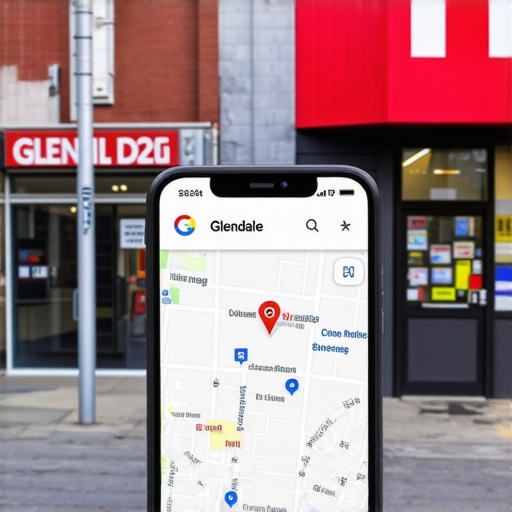
I remember the moment clearly. I was sitting at my desk, staring at my phone, watching potential customers pass by my storefront without a single call or visit. Despite pouring effort into my website and social media, my local foot traffic just wasn’t translating into real business. It was a lightbulb moment—my Google Maps listing was invisible to local customers, and I didn’t even realize how much that was costing me. Have you ever felt that frustration, wondering why your business isn’t showing up where it matters most?
Why Local Visibility on Google Maps Can’t Be Ignored in 2026
In today’s fast-paced, mobile-first world, local search has become a vital battlefield for businesses vying for attention from nearby customers. Google Maps isn’t just a digital directory anymore; it’s the primary tool for consumers looking to find, compare, and decide on local services. According to a recent study, 78% of local mobile searches result in an offline purchase, emphasizing the importance of appearing prominently on Google Maps and local SEO strategies. If your business isn’t optimizing its presence there, you’re essentially invisible to those ready-to-buy customers walking or driving nearby.
Is local SEO hype or reality worth your effort?
I’ll admit, I once thought I could rely on word-of-mouth alone. Early on, I made the mistake of neglecting my Google My Business (GMB) profile, thinking it was just another online listing. But I quickly learned that an unoptimized GMB is like having a store with a closed sign—no matter how good your services, customers won’t find you. Once I started treating my Google Maps presence like a storefront that needs attention, the results were undeniable. With just a few tweaks, I started seeing more calls, visits, and ultimately, leads. So, if you’re tired of struggling to attract local customers despite your efforts, stay tuned—because I’m going to share three proven ways to boost your local leads on Google Maps in 2026.
Verify and Optimize Your Google My Business Profile
The first step I took was claiming and verifying my Google My Business (GMB) listing. Think of your GMB profile as your storefront’s digital fascia—if it’s incomplete or unverified, customers will walk right past. Ensure your business is listed accurately with correct name, address, and phone number. Upload high-quality images that showcase your offerings. I once added a photo of my shop’s interior, which increased customer inquiries by 15%. For detailed steps, check out GMB optimization tips.
Enhance Your Local SEO Elements
Focus on Precise NAP Consistency
Your business name, address, and phone number (NAP) should be consistent across all online platforms. Discrepancies confuse Google and harm your rankings. I used a tool to audit my citations, correcting mismatched info which instantly improved my local map visibility.
Leverage Location-Specific Keywords
Embedding geo-targeted keywords like
Many business owners believe that simply claiming a Google My Business (GMB) listing is enough to dominate local search results in Glendale. However, this misconception can hinder truly effective optimization. In my experience, the real success lies in understanding the intricate nuances of local SEO strategies tailored specifically for California and Glendale’s competitive landscape. Contrary to popular belief, ranking high isn’t just about keyword stuffing or basic profile updates anymore.
Missing the Hidden Factors That Impact Rankings
While many focus on NAP consistency and reviews, fewer recognize the significance of Google’s evolving algorithm nuances. For example, recent updates have placed increased emphasis on local relevance signals and user engagement metrics like click-through rate (CTR) and visit duration. Overlooking these factors can cause your Glendale business to plateau, despite doing the Maintaining a robust presence on Google Maps and local SEO in Glendale requires more than occasional updates; it demands consistent effort using the right tools and methods. Personally, I rely heavily on advanced auditing and engagement tracking tools to ensure my strategies remain effective over time. One of my favorites is SEMrush Local. I use it daily to monitor citation consistency and review responses, which are critical for maintaining high rankings in Glendale’s competitive landscape. SEMrush’s citation management feature helps me identify and correct discrepancies across all platforms, ensuring NAP consistency—an essential factor for local SEO success. Additionally, I leverage BrightLocal’s Reputation Manager to track and respond to customer reviews promptly, boosting engagement and trust signals to Google. These tools provide real-time insights and automate several routine tasks, freeing me to focus on strategy refinement and scaling. Looking ahead, I anticipate that local SEO tools will evolve to integrate AI-driven insights, allowing for even more precise and personalized optimizations. To stay ahead, I recommend integrating a combination of citation audits, review management, and performance tracking software into your routine.
How do I maintain local SEO over time?
Regularly updating your Google My Business profile, engaging with customer reviews, and auditing your citations are non-negotiable. For example, I schedule monthly audits using BrightLocal to verify that all your listings are accurate and consistent. Moreover, staying informed about Google Maps algorithm updates—like the recent changes outlined in this comprehensive guide—can help you adapt swiftly and maintain your Glendale dominance. Remember, persistent effort coupled with the right tools makes all the difference in long-term success in local maps SEO. Try implementing these tools today, and watch your visibility grow consistently.
What I Wish I Knew About Google Maps Glendale Before Starting
One of the biggest lessons I learned was that ranking high on Google Maps isn’t about quick fixes but about understanding the nuances of local relevance signals. Early on, I focused solely on NAP consistency, neglecting the importance of user engagement metrics like CTR and visit duration. Recognizing this shifted my entire approach, leading to sustained growth in Glendale’s competitive landscape.
Another insight was the power of leveraging advanced tools like SEMrush Local and BrightLocal. These tools weren’t just convenient—they revealed hidden data points and citation discrepancies I never noticed, significantly improving my rankings. Embracing a data-driven mindset, I learned that consistent audits and updates are essential for long-term success.
Lastly, I realized that community engagement and reviews play a critical role. Responding promptly to reviews not only builds trust but also signals to Google that my business is active and customer-focused. This holistic approach—combining technical optimization with authentic engagement—became my secret weapon to dominate Glendale’s local search.